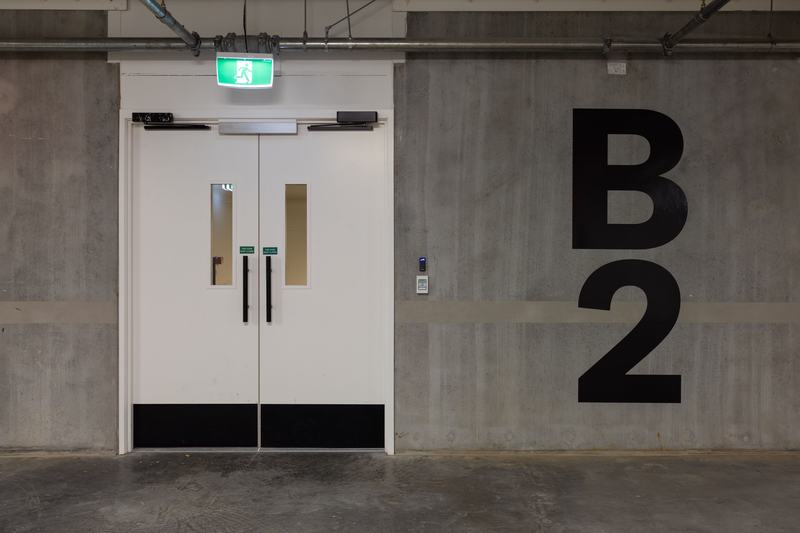
These two CPD sessions explore how informed specification and early design decisions can create safer, more compliant built environments.
Understanding Fire Performance and Boundaries
With Soteria Doors and Boundaryline

 CPD & CE Credits
NZ Registered Architects Board: 10 Design, 10 Documentation LBP: 2 Points Australian CPD ACT-SA-NT: 2 Points Australian QLD - NSW - VIC - TAS - WA: 2 Points
 Presented By
Teulo Ed and Peter Raimondo
Event Description
Daniel Simpkin of Soteria Doors will unpack fire door testing in New Zealand, addressing common misconceptions, testing pathways and specification risks. Karim Khan and Rachel Blithe of Boundaryline will explore boundary design for safe, inclusive learning environments, covering Ministry of Education guidance, CPTED, accessibility and whole-of-life performance.
Daniel Simpkin | Director | Soteria Doors
Synopsis: This CPD centres on Fire Door Testing and the common myths and misconceptions surrounding it. Attendees will learn how fire doors are tested and the process for project specific fire testing. The session highlights product limitations, specification risks and the importance of selecting fire doors supported by appropriate testing and documentation.
Key Learning Outcomes:
- How fire testing is conducted in New Zealand
- Pathway to bringing a fire door product to market
- Risks and opportunities of fire testing
Speaker BIOs:
Rachel Blithe | leads National Partnerships at Boundaryline, connecting architects, landscape architects, housing providers and developers to encourage earlier, more considered thinking around fencing, landscape and the spaces between our homes. Her role focuses on influencing specification and design conversations at an industry level, considering the wider impact fencing can have on safety, privacy, connection, accessibility and wellbeing.
Working particularly across large-scale residential and community housing, Rachel advocates for fencing to be considered as part of the overall landscape and built environment from the outset. Her focus is on creating better outcomes for projects and the people who live within them, while helping specifiers balance design intent, compliance, durability and whole-of-life performance.
Karim Khan | Strategic Partnerships Manager at Boundaryline, working closely with major developers, group builders and delivery partners on large-scale residential and development programmes across New Zealand. With extensive experience across the fencing and construction sector, he brings a practical understanding of product application, pricing, installation and project delivery.
His role focuses on bridging the gap between early design decisions and successful delivery on site. Working alongside Boundaryline’s technical, partnerships and sales teams, Karim helps develop scalable fencing and balustrade solutions that can be incorporated into design guides, specifications and repeat development programmes - creating greater consistency from design through to delivery.
Synopsis: This CPD session explores how thoughtful boundary design can create safe, inclusive and welcoming learning environments. It covers Ministry of Education guidance, CPTED and passive surveillance, early integration of fencing and access, designing for diverse learner needs, and whole-of-life considerations including durability, maintenance and long-term performance.
Key learning outcomes:
- Interpret Ministry of Education design guidance and understand how it informs the planning of safe, inclusive and welcoming learning environments.
- Apply CPTED, passive surveillance and access principles to balance student safety and security with openness, visibility and community connection.
- Integrate boundary design earlier in the design process, considering landscape, playgrounds, circulation, emergency access, fall protection, buildability and compliance.
- Design for diverse learner needs, including accessibility, physical and sensory disabilities, neurodiversity and individual student requirements, through appropriate gates, latches, sightlines and boundary treatments.
- Evaluate fencing and boundary systems using whole-of-life principles, considering durability, maintenance, corrosion resistance, repairability, lifecycle cost and long-term asset performance.