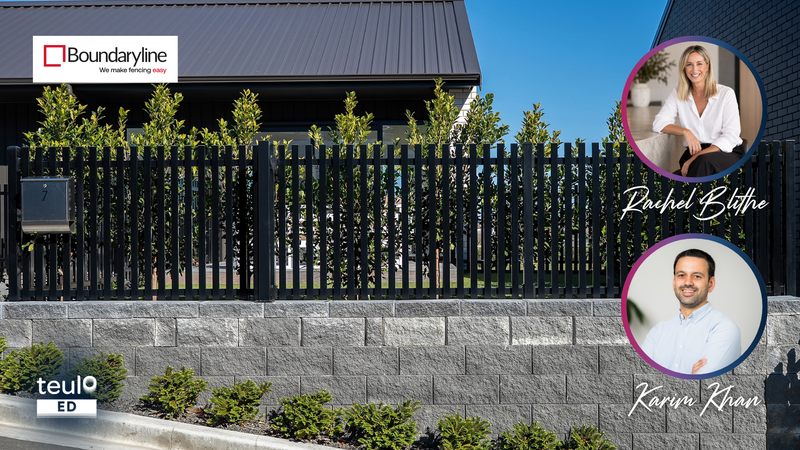
This CPD session explores the key considerations for specifying compliant balustrade systems, from early design decisions and compliance pathways through to structural performance, detailing and project-specific specification.
Specifying Compliant Balustrades
With Boundaryline

 CPD & CE Credits
NZ Registered Architects Board: 5 Design, 5 Documentation Australian CPD ACT-SA-NT: 1 Points Australian QLD - NSW - VIC - TAS - WA: 1 Points LBP: 1 Points UK/EU Professional Development: 1 Hours
 Presented By
Boundaryline
Event Description
This content provides architects and designers with a practical understanding of balustrade design, specification and compliance under NZBC Clause F4 – Safety from Falling.
It explores the key compliance, structural and site considerations that influence system selection, helping designers identify and resolve potential issues earlier and develop robust specifications that balance safety, architectural intent, durability, constructability and whole-of-life performance.
Learning Outcomes:
- Interpret the key requirements of NZBC Clause F4 – Safety from Falling and understand how barrier height, geometry, openings and location influence balustrade design and specification.
- Evaluate balustrade systems against project-specific performance and design criteria, including architectural intent, materiality, durability, visibility, cost and whole-of-life considerations.
- Identify critical site and interface conditions—including level and raking applications, changes in level, substrates, fixing methodology and adjacent construction—that should be resolved during design and documentation.
- Understand the role of structural engineering and producer statements, including PS1 documentation, in demonstrating design compliance and supporting the building consent process.
- Develop a more robust balustrade specification by understanding the differences between standardised, configurable and bespoke systems, and where early coordination can reduce compliance, procurement and installation risk.
- Recognise common balustrade design and specification issues that can lead to non-compliance, RFIs or on-site modifications, and understand how these can be addressed earlier in the design process.
Speakers BIO:
Rachel Blithe leads National Partnerships at Boundaryline, connecting architects, landscape architects, housing providers and developers to encourage earlier, more considered thinking around fencing, landscape and the spaces between our homes. Her role focuses on influencing specification and design conversations at an industry level, considering the wider impact fencing can have on safety, privacy, connection, accessibility and wellbeing.
Working particularly across large-scale residential and community housing, Rachel advocates for fencing to be considered as part of the overall landscape and built environment from the outset. Her focus is on creating better outcomes for projects and the people who live within them, while helping specifiers balance design intent, compliance, durability and whole-of-life performance.
Karim Khan leads Strategic Partnerships at Boundaryline, working closely with major developers, group builders and delivery partners on large-scale residential and development programmes across New Zealand. With extensive experience across the fencing and construction sector, he brings a practical understanding of product application, pricing, installation and project delivery.
His role focuses on bridging the gap between early design decisions and successful delivery on site. Working alongside Boundaryline’s technical, partnerships and sales teams, Karim helps develop scalable fencing and balustrade solutions that can be incorporated into design guides, specifications and repeat development programmes - creating greater consistency from design through to delivery.