“When I started in the solar industry 10 years ago, it was driven by government subsidies and tariffs, with the goal being to get a return on your business investment as quickly as possible,” says Mark Golding, Head of Sales for UK-based Spirit Energy. “Our customers now are very different; the main driver we’re seeing is a desire for true energy independence.”
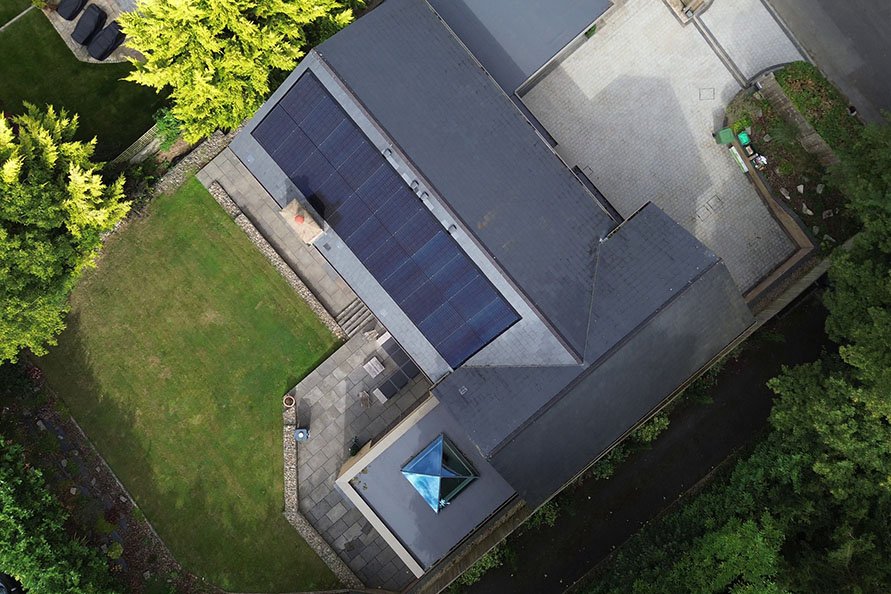
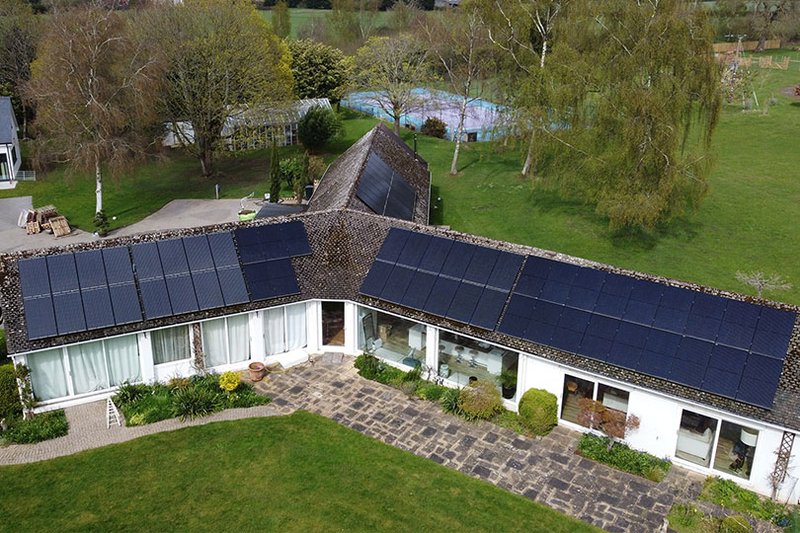
Spirit Energy works with both residential and commercial customers to design bespoke solar systems that meet their specific needs. As early movers in the UK renewables space - the business launched back in 2010 - their team brings deep insights and experience to projects across a range of types and scales. “So much of what we’re able to do comes from the legacy created by our Founder, Erica Charles,” says Alicja Kopińska, Head of Marketing. “She is a mathematician who undertook a Master’s on the complex technology behind solar panels. That knowledge was used to create our own in-house, highly accurate solar calculator, which enables us to provide carefully engineered quotations and properly sized systems, rather than cookie cutter solutions.”
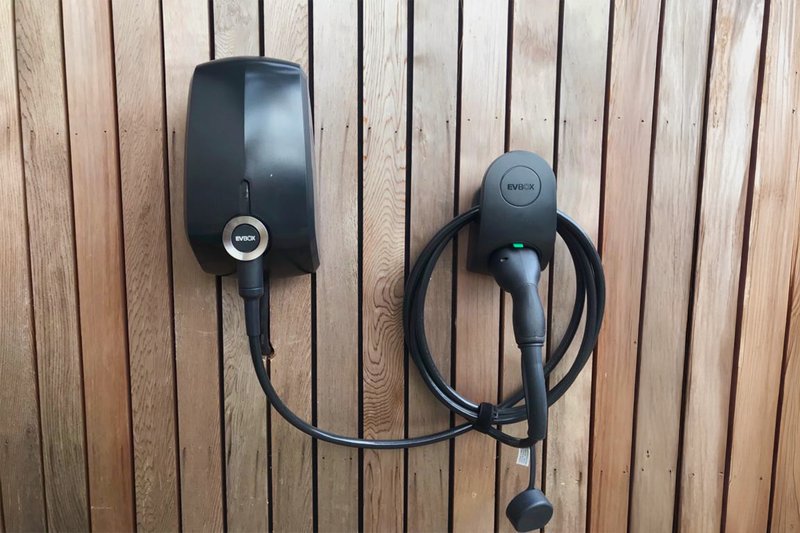
This customisation is especially important in the UK market, Mark says, due to the variable nature of the housing stock. “With the older buildings we have here, every roof is unique. In both residential and commercial settings, that can mean a big difference between the right system for you and the right system for your neighbour next door.” Spirit Energy can accommodate those custom requirements, as well as adapting their solutions for a changing energy market. “Every residential installation now includes a battery,” Alicja says, “often as part of a bundle that also includes a charger for electric vehicles. This is a big shift from even a few years ago.”
Customer needs across the board are moving towards systems with batteries, they say, which can be particularly important in the UK because of limited or unpredictable access to the sun. “We’re not like Australia or the US,” Mark says, “where there is often an excess of solar power in summer, meaning solar panels need to be curtailed, so it makes sense to install as much solar as possible to try and meet the UK's Net Zero goals. Including a battery in your system enables you to shift your high-usage activities out of peak time, rather than just drawing directly from your solar system during daylight hours. This is becoming a bigger and bigger priority for many solar users as the global context directly affects power supply and cost. A battery provides peace of mind that your system is truly independent as they also provide power cut protection.”
The UK’s renewable energy use will further shift in 2027 with the introduction of the Future Homes Standard in March, which requires all new-built homes to have solar PV. In most cases, this will mean a rooftop array covering an area equivalent to 40% of the home’s floor space. “Future Homes means that the building industry can’t just do the bare minimum anymore by throwing on a couple of panels,” Mark says. “From a net zero perspective, this is a change that should’ve been implemented years ago.” “For new-build buyers living in homes we have specified, you get a system designed to actually perform, not a minimum ticked off on a drawing,” Alicja adds. “This is one way that people can prepare for energy and electricity demand to increase over the years ahead.”
With feet in both residential projects and commercial projects, Spirit Energy is able to take insights from each sector to develop solar systems that deliver the best results for their customers. “There are a lot of providers who only do one or the other,” Mark says. “But we operate extensively in both spaces. Often, we’ll have a residential client who will come back to us and ask us to fit out their business, or vice versa. This gives us really good insights into how an installation is feasible for the average domestic customer right through to a big commercial customer with very different needs.”
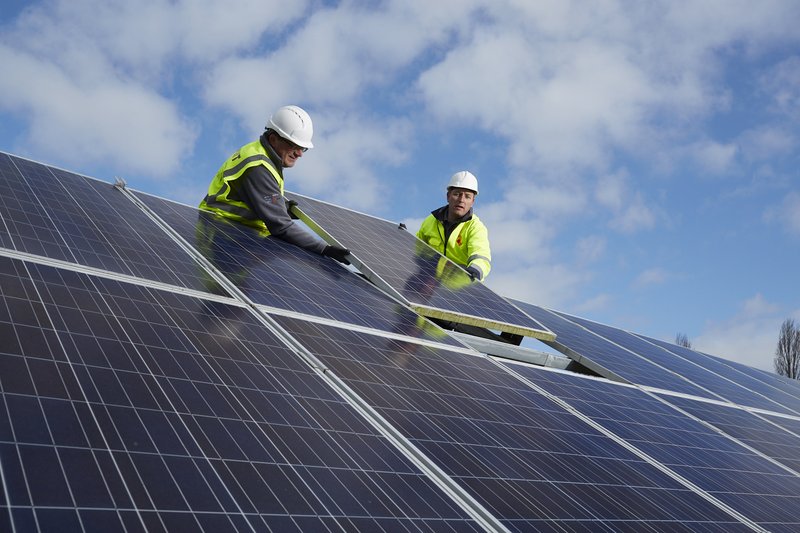
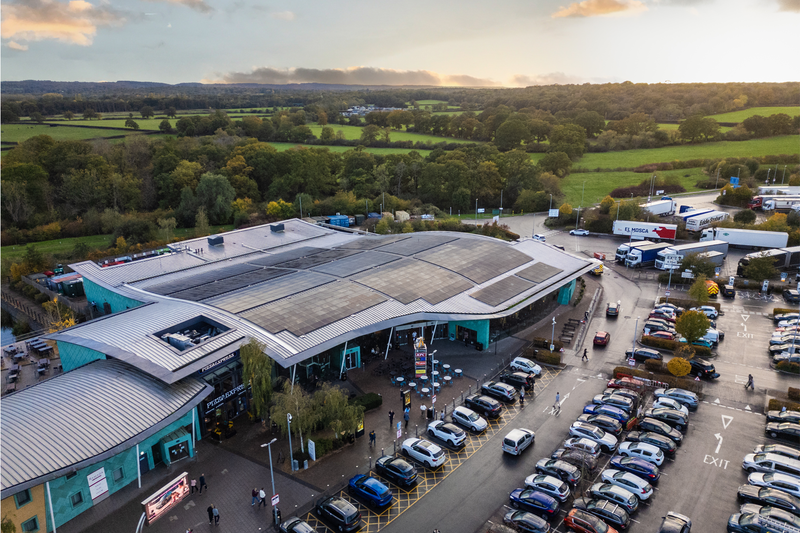
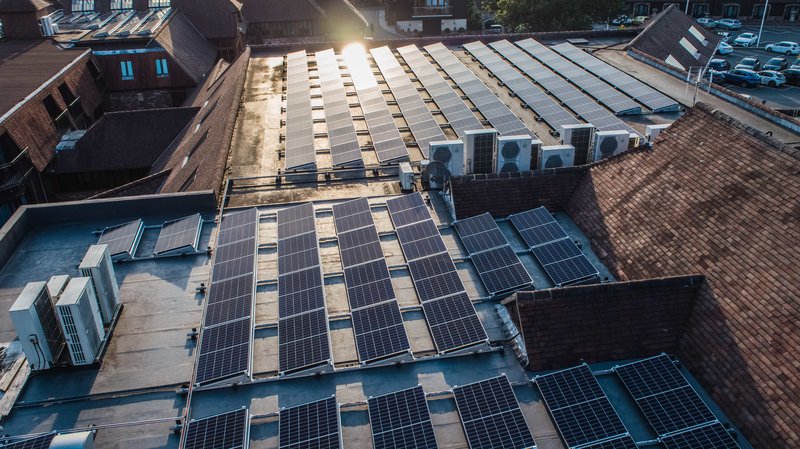
Spirit Energy recently completed a major commercial installation at Cobham Service Station on the M25 motorway. As Europe’s busiest 24/7 service stop, this was a particularly tricky site to work on. “We had to put scaffolding up at 2am so as not to get in the way of critical loading or unloading times,” Alicja says. “There’s constant traffic and deliveries - thousands of people through there every day,” Mark adds. “This meant that we had to place a heavy priority on safety, as well as accommodating their operational needs in ways like telehandler lifting and system commissioning in the middle of the night. Not only do our systems have to perform, they have to be installed in the most seamless way possible, whether that’s a high-traffic service area or a care home where residents might not understand why scaffolding is going up outside. It’s important to be flexible about the installation, not just deliver what’s written on the job sheet.”
The team is also nearing completion on a 256.5 kWh Tesla Powerwall 3 battery storage system with more than 500 panels. “It’s the largest possible site with that type of battery and a great example of how battery technology has come a long way from the niche use case it was 10 years ago,” Mark says. “You’ve got a wind turbine and lots of independent solar areas, all of which work together to produce and store power for use when it is most needed.”
As the renewable energy space grows exponentially, one of the biggest challenges can be getting potential users to fully understand the benefits. “Commercial solar makes incredibly good business sense,” Mark says. “Often, owners don’t realise just how good the paybacks are.” “Solar is one of the best ways you can help yourself while also helping the planet,” Alicja agrees.
The payback time for commercial solar installations can be as little as 4-6 years, Mark says, often with no direct costs. “There are plenty of ways to get a Power Purchase Agreement to fund the commercial installation on your roof, which pays for itself very quickly with no upfront commitment. For domestic customers, the return time is a bit longer, but the numbers still make financial sense even if the initial outlay is coming out of your own pocket.”
With a Spirit Energy system installed at his own home, Mark is uniquely aware of both the costs and the benefits. “When you have the technology yourself, you understand it so much better. Before I joined Spirit Energy as a customer, my house was grid-powered with gas-powered central heating, and I was driving a petrol car. Now, I’m completely energy independent. I don’t have to worry about power cuts, rising electricity, or petrol prices, and I can better understand and support our customers because I have experienced our systems from their side.”
The industry continues to develop at pace, Alicja says, with no shortage of opportunities coming up in the years ahead. “People believe in solar. The technology is constantly being developed and made more efficient with new options on the market every day. There’s great work being done to improve the technology and make it accessible to everyone.”
https://www.spiritenergy.co.uk/
“There’s a battery revolution coming on the commercial side,” Mark adds. “Energy prices will only continue to increase; commercial sites that have already installed solar will be looking to add batteries to their systems to further reduce costs. AI integration is also rapidly transforming the industry. Over the next few years, I’d expect we’ll see algorithms and smart grid systems that enable you to charge and discharge batteries at the best times possible. I can also see improved legislation on fire safety. In the same way the Future Homes Standard has come in, PAS 63100:2024 is coming in October to tighten up battery installs, and I can see RC62 being formally adopted at some point to help make the industry safer.
“Right now, over 80% of the world’s energy needs are still being met with fossil fuels, and only 5.2% of UK residential homes have solar, where I would estimate only around 10% of commercial roofs have solar panels. If we’re at all serious about reducing greenhouse gas emissions and getting the UK to be Net Zero by 2050, we have to move those numbers. Solar is absolutely here to stay, and it’s a key part for us, as a global community, to achieve Net Zero.”
To learn more and connect with Mark and Alicja, visit https://www.spiritenergy.co.uk/ and follow Spirit Energy on YouTube.