“If you have a poorly insulated existing or older house, improving its airtightness can have a similar impact on comfort and energy efficiency to improving the insulation, but often at a fraction of the cost,” says Chris Caiger, Co-Founder and Director of Aero Solutions.
Aero Solutions’ goal is to increase the performance, comfort, and energy efficiency of New Zealand homes, and they’re doing this in a way that is accessible to both homeowners and industry professionals. “Energy efficiency has three main drivers: insulation in your walls and ceilings; windows, including thermal breaks and glazing; and airtightness,” Chris says. “They’re all equally important and have the same effects, but less is known here in New Zealand about how transformational airtightness can be.” Chris’ Co-Founder, Mark Sixton, agrees. “The technology we’re implementing is a massive enabler to improve the comfort of both existing and new homes.”
In most of the world, minimum airtightness levels are regulated as an essential build quality standard. New Zealand is currently lagging behind, Chris says, but he hopes that Aero Solutions can help the industry catch up to the well-established work that’s already being done overseas. “Airtightness is not covered in the New Zealand Building Code, which makes us an outlier among developed countries. The people who are paying the price for that are homeowners.”
The differences can be stark, with new homes in other developed countries being around three times as airtight as new New Zealand homes on average — giving them a significant advantage in energy efficiency, comfort and moisture management. “A typical new home here has enough gaps in it to be equivalent to having a window open all the time,” Chris says. “In an older, existing home, that increases to something like having a door and a window open.”
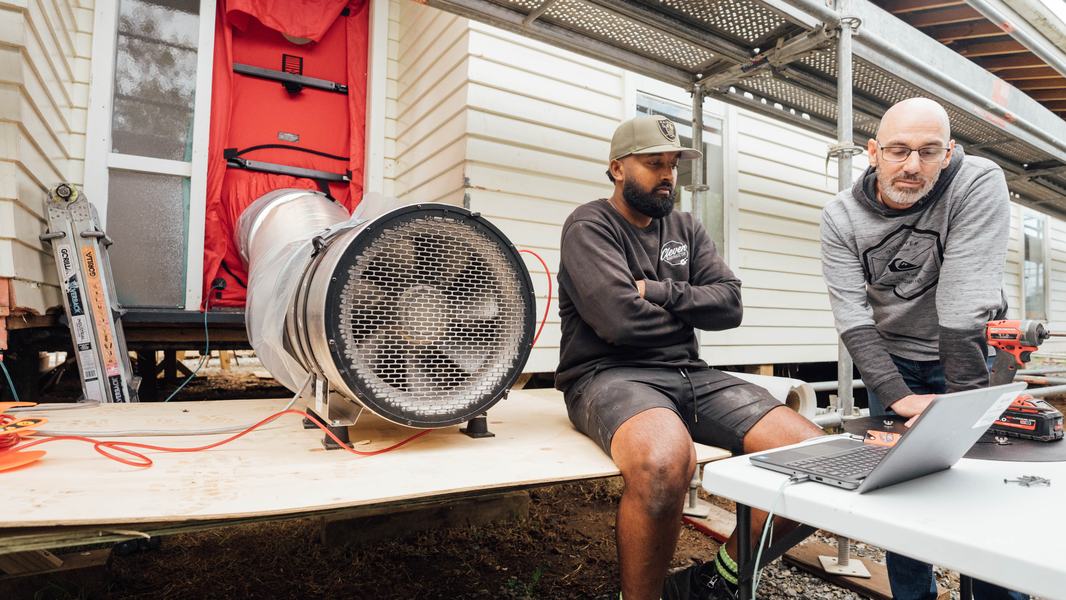
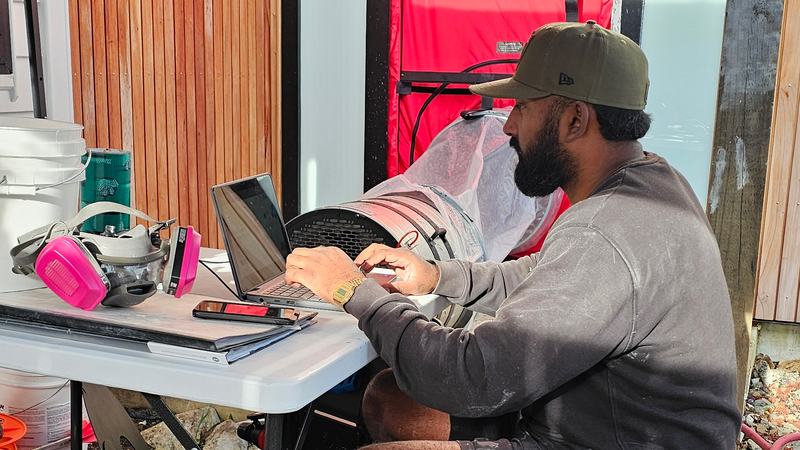
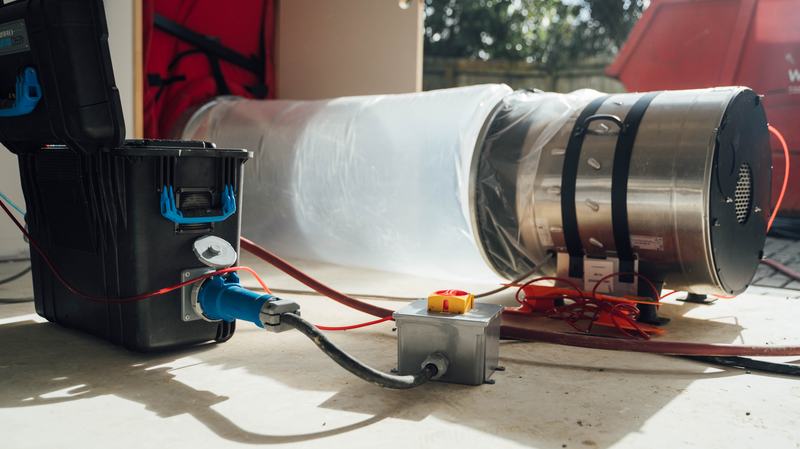
ACH50 is the standard measure of airtightness, providing a clear way to compare how airtight different homes are. “The number means air changes per hour when the interior of the home is pressurised to 50 Pascals above the outside air pressure. We use a blower door to create that pressure difference and measure how much air is leaking through gaps and cracks in the building.”
One of our recent projects was a student flat in Dunedin called the Feisty Goat, which measured 16ACH50 when we first assessed it. In real-world terms, that meant that 80% of the air was blowing out every hour, or that the total air in the house was being replaced with cold, exterior air 19 times per day. The students living there spent their lives in puffer jackets and beanies just trying to stay warm.
“This is not uncommon in older houses - Feisty Goat wasn’t even the worst we’ve seen - and it really shows the human suffering side of this problem. A little space heater has no chance of fighting that, so many New Zealanders don’t even try. The goal for us, as we did for those students in Dunedin, is to get the airtightness to a normal level, where you’re looking at only about five or six air changes per day.”
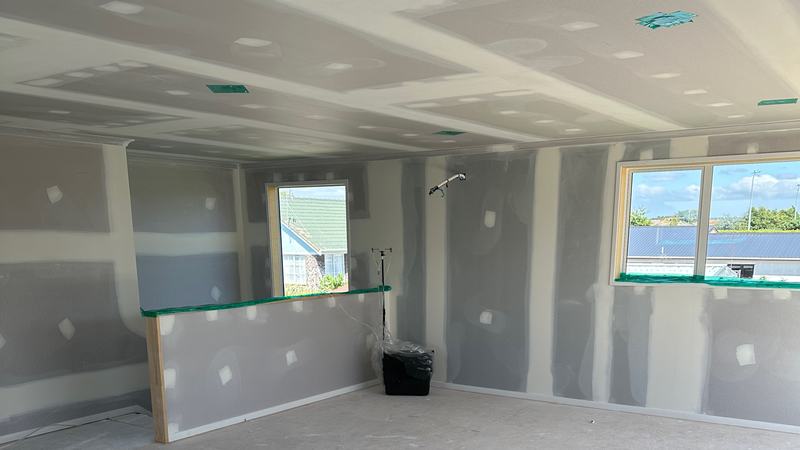
There are a few options on the market that can be used to achieve this, including SIPS and membrane systems, but Chris says that these historical methods often require the building to be designed differently in order to accommodate them, adding significant time and cost to construction “Our AeroBarrier system only takes about half a day implement, and it can be done later in the construction process. We come in with a blower door, pump up the pressure in the house, and put in our vapourised sealant to fill all the gaps and cracks. You could think of it like a giant puncture repair kit that automatically finds leaks, seeks them out, and fills them up. It’s extremely effective and safe - with 10 times fewer Volatile Organic Compounds (VOCs) than low-VOC paint - and durable enough to last up to 50 years.”
"We absolutely need a change of thinking in the way we build, and airtightness is a big part of that. So, any companies or any solutions that can come in that are already proven overseas will be a big part of improving our housing stock." Matthew Cutler-Welsh NZGBC
In older homes this AeroBarrier system is supplemented with the EnergyTight™ solution. This involves a diagnostic and a pressure test to find out what the existing issues are, including addressing airtightness of windows and putting in a suitable ventilation system to complement the solution. “It’s the cost equivalent of, say, painting the inside of your house, and we can do it in just a day or two. The positive outcomes for occupants are huge. New Zealand has serious issues with respiratory sickness and mould, and that’s because our housing stock allows uncontrolled air to get into cavities and condense. By implementing a measurable airtightness system with proven performance and coupling that with a continuous or balanced ventilation system, you can greatly increase both the health and the energy performance of your home.”
This is an area where homeowners are increasingly willing to invest, Chris says, and Aero Solutions can help them get the most bang for their buck. “80% of New Zealanders are concerned about rising energy costs, and Trade Me has seen a 70% increase in home buyers searching for energy efficiency. It’s a performance measure that actually helps sell houses. Airtightness is a really attractive way to achieve energy efficiency, as it can be offered as an optional add-on in the build process without altering the design. It’s great for industry professionals, as it can be a cost-effective way to achieve certifications such as Homestar - by lowering the ACH50, you can save costs in other areas - while still allowing trades professionals to use systems and tools they’re already familiar with.”
In particular, Chris sees big opportunities for builders to use airtightness as a differentiator, delivering more comfortable, energy-efficient homes with little added cost, and significantly improving existing homes that are cold and uncomfortable and hard or impossible to heat. This includes community housing, where companies can upgrade their housing stock to the level of a typical new home for a fraction of the cost and time required for a renovation. “We’re working on some large retirement homes in the Homestar area, and they have switched to AeroBarrier because it’s enabled them to reduce the cost of construction substantially and get a certified outcome. We’re also able to provide an efficient solution for social housing, where it might have previously cost hundreds of thousands to renovate existing homes; with EnergyTight™ we can help them turn those houses into valuable, high-performing assets for only about fifteen thousand dollars. It's a very viable way of upgrading social housing stock quickly and inexpensively.”
There’s still a lot of work to do to catch New Zealand up with the rest of the world, Mark says. “A big part of achieving that is continuing to educate the market about the importance of airtightness and how it’s a key component of the building industry.” “We need to normalise it,” Chris adds. “Not just in the industry, but among homeowners as well. There’s a lot of government support to make it part of the Building Code, and I’d like to see that happen. We have so much to gain in the performance, health and durability of our homes.”
To learn more and connect with Aero Solutions, visit https://aero.solutions/ and follow them on LinkedIn, Instagram and Facebook.